


PBT
Why Choose Us?
Quality products
The company has Germany barmag high-speed loading machine, TMT Japan imported winding machine, specializing in the production of various specifications of porous fine denier and differentiated microfiber products.
Wide range of products
Microdenier fiber; High elastic series: High elastic ultra-high elastic, PTT, PBT can be with function or color; Imitation cotton series; Regeneration series; Cationic luminous series; Functional yarn; PLA fiber; Polyester color silk, etc., can accept a variety of differentiated fiber customization.
Reliable service
We with the best cooperation team, in line with the common development with customers, create value faith, constantly improve the quality of their products, gain customers trust and love.
Professional team
We have professional R&D team, with many internationally renowned enterprises discuss for research, development and application in environmental protection and functional yarn and fabric.
What Is PBT
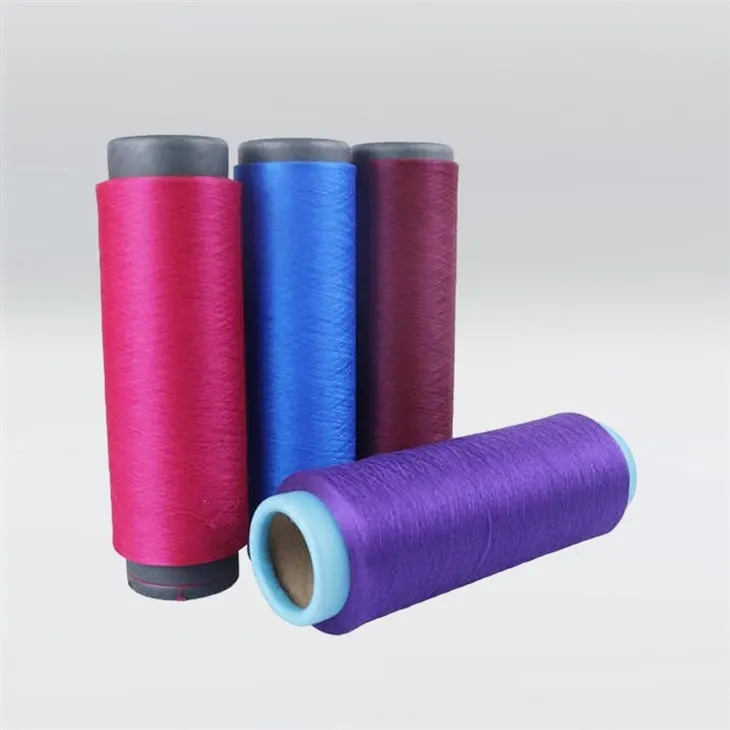
PBT yarn is a unique category of yarn which takes the full advantage of its polymer polybutylene terephthalate. This yarn facilitates the manufacturing of high comfort garments, carpets, and automotive fabrics. The fabric provides added comfort and seamless movement. This innovative yarn ensures a comfortable microclimate around the body. The yarn creates a finished product that is breathable and has great elasticity and superior color absorption. Due to their low water absorption rates (about 0.4% of h2o), PBT yarns are sweat resistant and their elasticity stays unaffected when exposed to moisture.


Properties of PBT
PBT yarns have the following properties:
PBT is basically a textured polyester with a nylon crimp characteristic.
PBT a high elastic, friction-textured material.
PBT has good stretch properties and unique recovery properties.
PBT is a high-resistant fiber that is both soft and elasticis high.
PBTresistant to perspiration and humidity.
PBT has both very low humidity take-up levels (only 0.4% approx.) and dries very quickly.
PBT elastic recovery with low subsequent ductility.
PBT good stretching with problem-free working properties.
PBT resistant to chlorine, good base resistance, no loss of fastness through UV rayslight-fastness similar to that of a polyester.
The Influence of PBT Yarn on the Weaving Process
When PBT filament has been combined with thicker yarns as weft in weaving in certain sequences, the cross marks/lines have appeared in the fabrics after thermal treatment, except when used in combination with similar types of synthetic fibers. When PBT filament has been combined with each weft, the shrinkage of the fabric after thermal treatment was too high (high elasticity).
When PBT is used in folded yarn in combination with natural yarns, at least the folding preparation stage is required. When folded PBT yarn was used as each weft, the shrinkage of the fabric after treatment was too high (high elasticity).
Using PBT as core surrounded by other fibers in a core-spun yarn has proven to have the least disadvantages: No marks/lines on the fabric surface after treatment, easy dyeing; can be used in sequences as weft and thus the degree of elasticity can be planned/controlled. The production price of the fabric increases, nevertheless, the percentage of PBT yarn in the fabric is as low as possible. The use of PBT yarns does not cause any problems in the weaving process, as the elasticity of yarns is gained after thermal treatment.
PBT Yarn Market Analysis and Latest Trends
PBT yarn, also known as polybutylene terephthalate yarn, is a synthetic fiber that is widely used in various applications such as automotive, textiles, electrical, and others. It is known for its exceptional properties such as high tensile strength, excellent chemical resistance, low moisture regain, and good flame resistance. These properties make PBT yarn a preferred choice for manufacturers across different industries.
The PBT yarn market has been witnessing steady growth due to the increasing demand from end-use industries. The automotive sector, in particular, has been a major driving factor for the market, as PBT yarn finds extensive usage in the production of automotive components such as airbags, seat belts, hoses, and electrical connectors. The growing automotive industry in emerging economies has positively impacted the demand for PBT yarn.
The expanding textile industry has also contributed to the market growth. PBT yarn is extensively used in the production of high-performance textiles for sportswear, swimwear, outdoor apparel, and home furnishings. The increasing awareness among consumers regarding the benefits of high-performance textiles has boosted the demand for PBT yarn in the textile industry.
The electrical industry has witnessed significant growth, further fueling the demand for PBT yarn. It is used in the manufacturing of electrical connectors, cable insulation, and other electrical components due to its excellent electrical properties and resistance to high temperatures.
The market analysis indicates that the global PBT yarn market is expected to witness a growth rate of around % during the forecast period. This can be attributed to factors such as increasing industrialization, growing consumer demand for high-performance materials, and technological advancements in PBT yarn production. Furthermore, the market is likely to expand in emerging economies as they continue to invest in infrastructure development and experience rapid urbanization.
The PBT yarn market is witnessing steady growth, driven by the demand from various industries such as automotive, textiles, and electrical. The market is expected to grow at a CAGR of % during the forecast period, with emerging economies playing a significant role in the market expansion.
PBT Main Technical Parameters
|
No. |
Item |
Premium Grade (AA Grade) |
First Grade(A Grade) |
|
1 |
Deviation of LD /(%) |
±2.0 |
±2.5 |
|
2 |
breaking Tenacity/(CN/dtex )≥ |
2.90 |
2.70 |
|
3 |
Uneven Rate of BT(CV)/(%) ≤ |
5.00 |
6.00 |
|
4 |
Breaking Elongation/(%) |
M1±4.0 |
M1±6.0 |
|
5 |
Dyeing Uniformity(Grey Level)/degree |
4-5 |
4 |
|
6 |
Oil Content/(%) |
M2±0.2 |
M2±0.3 |
|
7 |
Intermingle spot/(point/m) |
M3±4 |
M3±6 |
● PBT stretch yarn is ideal for cloth that is used in manufacturing flat knitted sweaters. The suitable elasticity of the material provides added comfort. Stockings woven with a PBT stretch yarn are light, breathable and comfortable, and have good elasticity. It is soft to touch and has great resistance and durability.
● PBT yarn is a unique category of yarn that takes full advantage of its polymer polybutylene terephthalate. This yarn facilitates the manufacturing of high comfort garments, carpets, and automotive fabrics. The fabric provides added comfort and seamless movement. This innovative yarn ensures a comfortable microclimate around the body.
● The yarn creates a finished product that is breathable and has great elasticity and superior color absorption. Due to their low water absorption rates (about 0.4% of h2o), PBT yarns are sweat-resistant and their elasticity stays unaffected when exposed to moisture.
● PBT yarn is a unique category of yarn that takes full advantage of its polymer polybutylene terephthalate. This yarn facilitates the manufacturing of high comfort garments, carpets, and automotive fabrics. The fabric provides added comfort and seamless movement. This innovative yarn ensures a comfortable microclimate around the body. The yarn creates a finished product that is breathable and has great elasticity and superior color absorption.
● Due to their low water absorption rates (about 0.4% of h2o), PBT yarns are sweat-resistant and their elasticity stays unaffected when exposed to moisture.
● It can also be equipped with elastic and non-elastomeric yarn which has high stretchability and superior elastic recovery. These characteristics are a result of multidimensional bulking processes that are not only linear, unlike an ordinary elastic yarn.
● Fabrics that are manufactured with this fiber even when the PBT content does not exceed 30 to 35%, turn out to be the ideal body-hugging garments that are breathable and comfortable. This has helped the fashion industry create versatile designs and countless clothing styles for the finished products.

PBT yarns are used in:
Weaving as weft insertion yarn (non or slight intermingled).
Weaving as warp yarn (sized or high/strong intermingled).
Circular knitting, weft knitting and warp knitting.
Narrow weaving and braiding.
Covered yarn applications.
PBT yarns are used mainly in stretch required fabrics, in jeans, lingerie, underwear, silk stockings, carpet for pile, sportswear.
Due to their excellent elastic recovery and resistance to corrosion, PBT yarns stand a good chance of being an alternative to elastane/rubber covered yarns in applications where stretch and recovery properties are in high demand.
PBT: Excellent Elasticity and Advantages over Traditional Materials
The elasticity of PBT yarn manifests in multiple aspects:
Soft and comfortable: The softness of PBT yarn originates from the unique arrangement of its molecular structure, allowing better fiber sliding and increasing fabric softness. PBT yarn boasts excellent anti-static properties, reducing static friction between fibers and further enhancing fabric smoothness. This soft and comfortable feature is crucial for close-fitting garments like underwear and sportswear, offering a pleasant wearing experience and minimizing skin irritation.
Strong wrinkle resistance: The high tenacity and resilience of PBT yarn contribute to its outstanding wrinkle resistance. Compared to traditional materials, PBT yarn is less prone to permanent deformation under force or compression. Therefore, slight wrinkles generated during wearing can quickly recover. This wrinkle resistance not only maintains a neat garment appearance but also reduces the need for ironing, extending the garment's lifespan and lowering maintenance costs.
Shape stability: The stable molecular chain structure of PBT yarn endows it with a high melting point and glass transition temperature, enabling it to maintain a stable shape under high temperatures. This shape stability prevents garments from deforming due to heat or moisture, preserving the intended visual effect designed by the designer. Consequently, PBT yarn is advantageous in crafting garments that require shape retention, such as suits and dresses, delivering a long-lasting wearing experience.
Wide adaptability: PBT yarn possesses extensive adaptability, suitable for various types of clothing designs and other fields like home textiles and automotive interiors. Its excellent elasticity allows fabrics to better fit various shapes and sizes of object surfaces, providing designers with greater creative space.
PBT yarn features good wear resistance and chemical resistance, meeting the requirements for material strength and durability in different fields, thus having broad application prospects in industrial applications.
PBT Yarn Processing Manufacturing Process



Preparing the fibers
Fibers are shipped in bales, which are opened by hand or machine. Natural fibers may require cleaning, whereas synthetic fibers only require separating. The picker loosens and separates the lumps of fiber and also cleans the fiber if necessary. Blending of different staple fibers may be required for certain applications. Blending may be done during formation of the lap, during carding, or during drawing out. Quantities of each fiber are measured carefully and their proportions are consistently maintained.
Carding
The carding machine is set with hundreds of fine wires that separate the fibers and pull them into somewhat parallel form. A thin web of fiber is formed, and as it moves along, it passes through a funnel-shaped device that produces a ropelike strand of parallel fibers. Blending can take place by joining laps of different fibers.
Combing
When a smoother, finer yarn is required, fibers are subjected to a further paralleling method. A comblike device arranges fibers into.
Drawing out
After carding or combing, the fiber mass is referred to as the sliver. Several slivers are combined before this process. A series of rollers rotating at different rates of speed elongate the sliver into a single more uniform strand that is given a small amount of twist and fed into large cans. Carded slivers are drawn twice after carding. Combed slivers are drawn once before combing and twice more after combing.
Twisting
The sliver is fed through a machine called the roving frame, where the strands of fiber are further elongated and given additional twist. These strands are called the roving.
Spinning
The predominant commercial systems of yarn formation are ring spinning and open-end spinning. In ring spinning, the roving is fed from the spool through rollers. These rollers elongate the roving, which passes through the eyelet, moving down The sliver is fed through a machine called the roving frame, where the strands of fiber are further elongated and given additional twist. The predominant commercial systems of yarn formation are ring spinning and open-end spinning. Open-end spinning omits the roving step.
The sliver is fed through a machine called the roving frame, where the strands of fiber are further elongated and given additional twist. The predominant commercial systems of yarn formation are ring spinning and open-end spinning. Open-end spinning omits the roving step.
and through the traveler. The traveler moves freely around the stationary ring at 4,000 to 12,000 revolutions per minute. The spindle turns the bobbin at a constant speed. This turning of the bobbin and the movement of the traveler twists and winds the yarn in one operation.
Our Factory
Suzhou Junhui Textile Co., Ltd
The company is founded on JUN. 2015, it is committed to develop and sell differential yarn: Microfine yarn, Recycle yarn, Flame retardant yarn, Cationic dyeing yarn and Knitting fabric products. We have professional R&D team, with many internationally renowned enterprises discuss for research, development and application in environmental protection and functional yarn and fabric. The products are over 90% for export, we have broad customer base, and establish a cooperative relationship with the customer located in 36 countries. As a responsibility, the brand service oriented textile enterprise, we has always been convinced that the only customer success is our foothold. Therefore, we with the best cooperation team, in line with the common development with customers, create value faith, constantly improve the quality of their products, gain customers trust and love.


FAQ
We're well-known as one of the leading pbt manufacturers in China. If you're going to wholesale cheap pbt, welcome to get free sample from our factory. Also, customized service is available.
Heat insulating Polyester yarn, Good elasticity yarn, Suitable for shoes and socks